Home-Body Guides-Cellulite vs Fat: Which Body Treatment Targets Each Concern?
Cellulite vs Fat
Cellulite vs Fat: Which Body Treatment Targets Each Concern?
Updated 20 August 2026
9-minute read
Cellulite
Cellulite and localised fat can look similar but they are not the same concern. Learn how to tell them apart and which body treatments in Singapore are designed to target fat, cellulite or mixed concerns.
Quick answer
Body fat describes adipose tissue stored in the body. Cellulite describes the dimpled or puckered surface appearance created by an interaction between subcutaneous fat, connective tissue and the skin. You can be slim and still have cellulite, and losing fat does not guarantee that cellulite will disappear.
Cellulite vs Fat: The Difference at a Glance
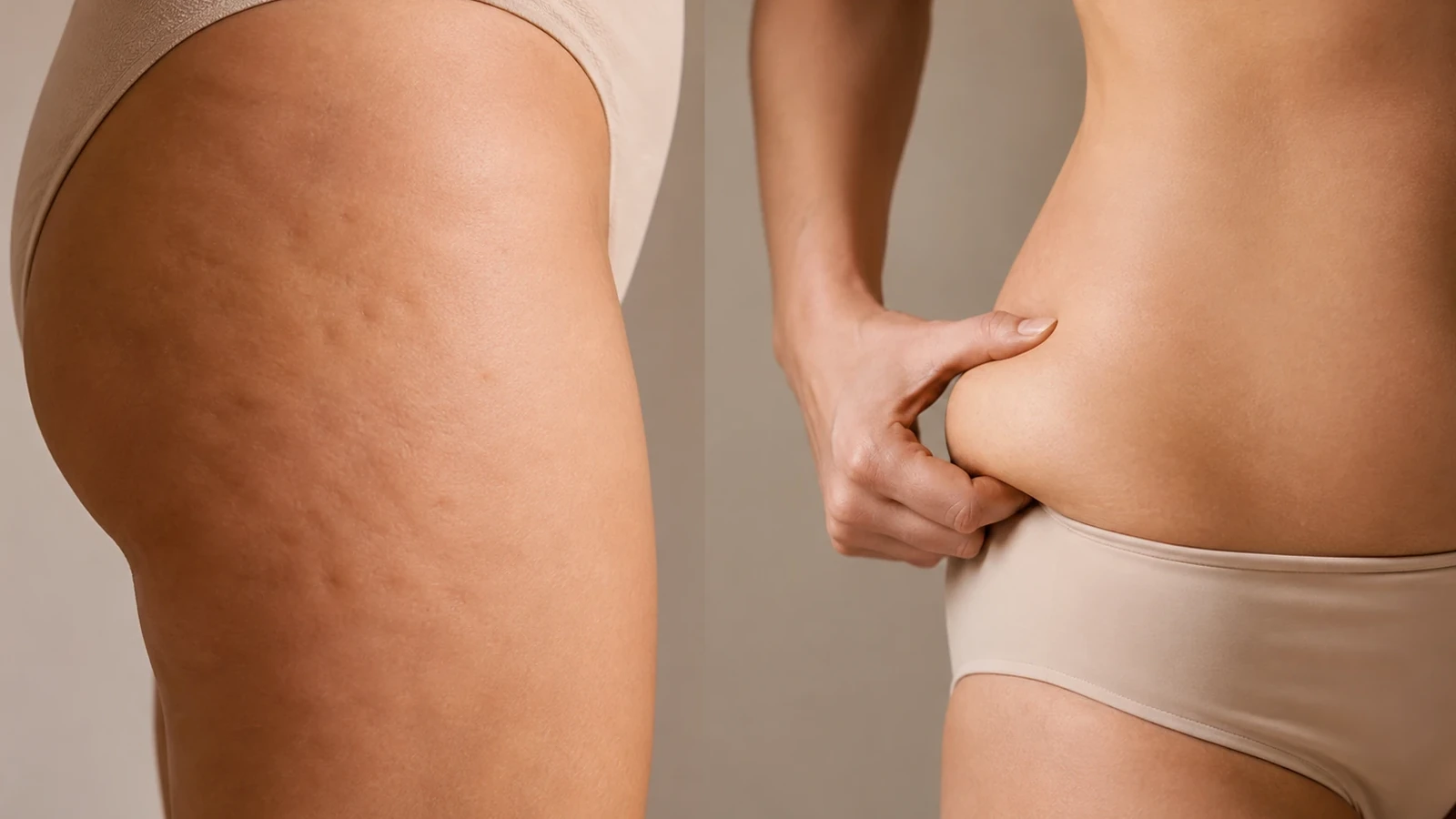
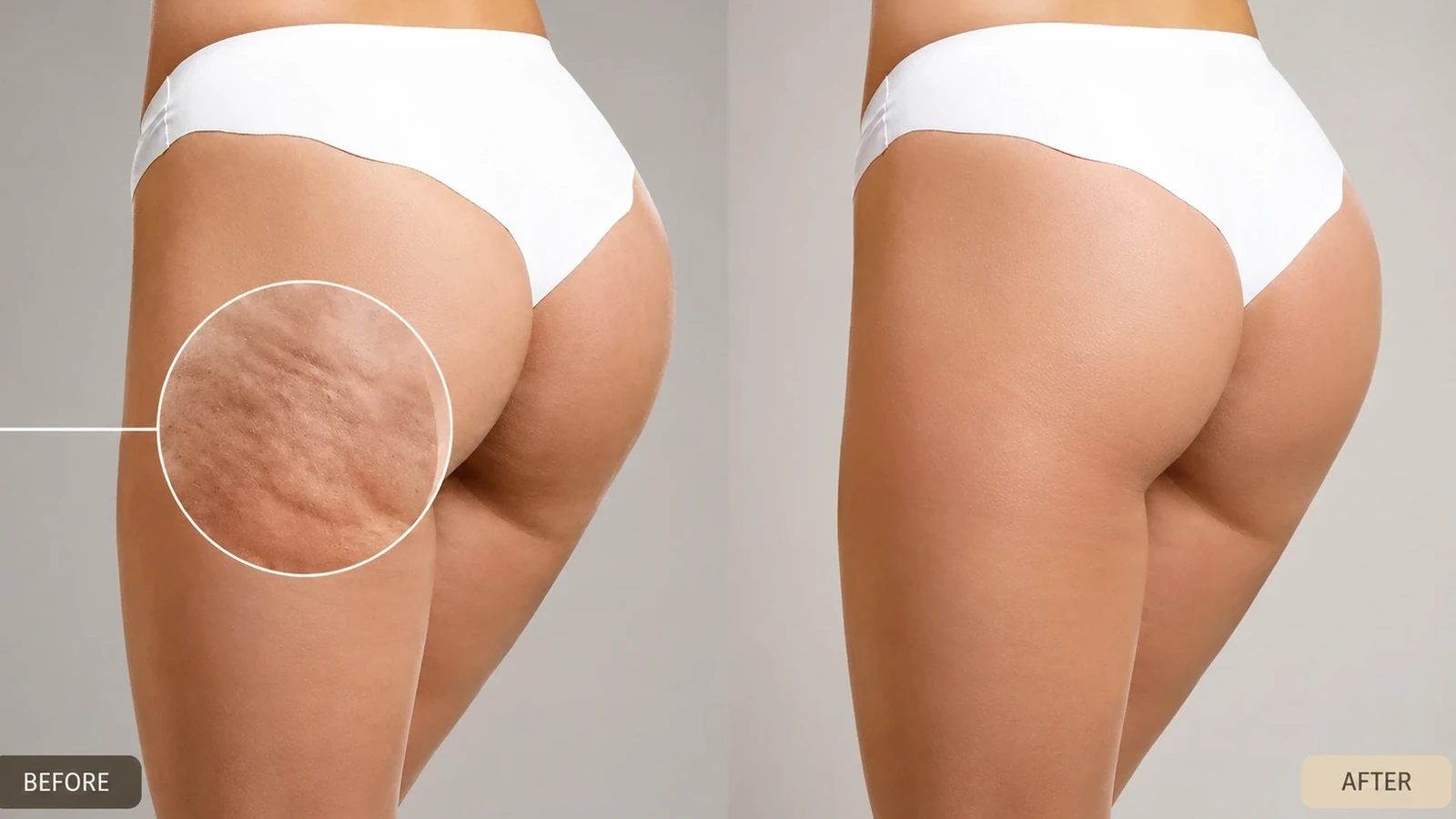
People often use “fat” and “cellulite” interchangeably, but they describe different things. Body fat is adipose tissue stored beneath the skin and around organs. Cellulite is an appearance of the skin—typically dimpling, rippling or an “orange-peel” texture—most commonly seen on the thighs, buttocks and hips.
Feature
Body fat
Cellulite
What it is
Adipose tissue stored in the body.
A dimpled surface pattern involving subcutaneous fat, connective bands and skin.
How it looks
Fullness, bulges or increased volume.
Puckering, dimples, ripples or uneven texture.
Who can have it
Everyone has some body fat.
People across many body sizes, including very lean individuals.
Effect of weight loss
Overall fat volume can reduce with sustained energy balance.
May improve in some people but can remain despite lower body fat.
Treatment goal
Reduce or contour a selected localised fat pocket.
Improve the appearance of dimpling, texture and related skin firmness.
Why Does Cellulite Happen?
Cellulite forms because the skin surface is influenced by what is happening beneath it. Fibrous connective bands anchor the skin down while the fat layer can push upward between those bands, creating a puckered pattern. Cleveland Clinic notes that the exact cause is not fully understood and that genetics, sex, age and tissue structure can all play a role.
01
Connective-tissue structure
Fibrous bands beneath the skin can pull downward unevenly and contribute to visible dimples.
02
Subcutaneous fat
Fat pushing upward between connective structures can accentuate the surface pattern.
03
Skin quality
Thinner or less firm skin can make the underlying texture easier to see.
04
Genetics and hormones
Individual connective-tissue arrangement and hormonal influences help explain why cellulite varies so much between people.
This is why cellulite is not a sign that someone is unhealthy or overweight. It is extremely common and can remain even in athletic people with low body fat.
Why Can Cellulite Remain After Losing Weight?
Reducing overall body fat may reduce the pressure of fat beneath the skin, which can soften the appearance of cellulite in some people. But weight loss does not directly release fibrous bands or automatically thicken and firm the skin. In some cases, lower fat volume may even make skin laxity more noticeable.
That is why the question should not only be “How do I lose thigh fat?” but also “Is the thing I dislike actually volume or texture?” If the main concern is circumference or a pinchable bulge, see our fat reduction guide. If the concern is dimpling, our dedicated cellulite treatment page explains the treatment approach in more detail.
How Treatment Selection Differs for Cellulite and Fat
A treatment designed mainly to reduce a localised fat pocket is not automatically the right treatment for cellulite. At LAVAĒ, the target tissue and visible concern are considered separately.
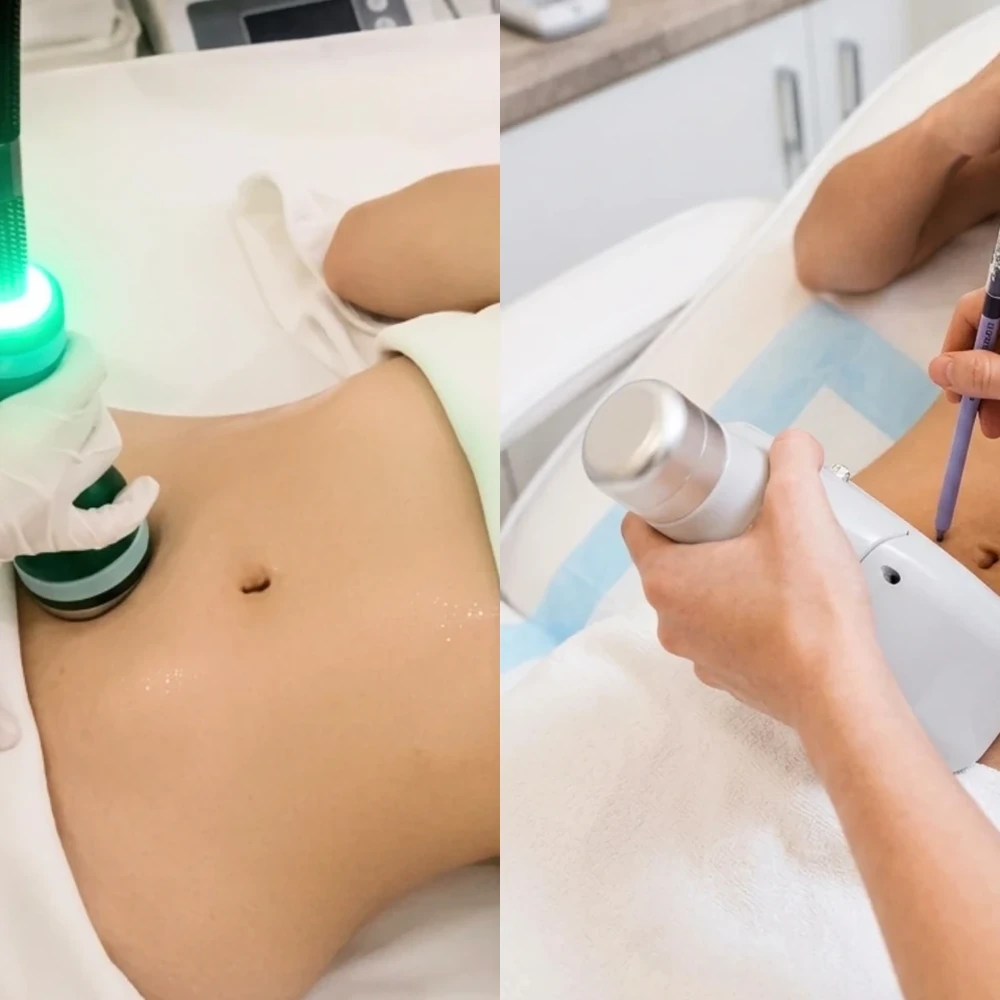
RF and EMS may be considered when the goal includes firmer-looking skin and muscle tone rather than cellulite alone.
The best match depends on whether you mainly see dimples, a fat bulge, loose skin—or a combination. Combining goals under one label such as “slimming” can lead to choosing the wrong treatment.
Choosing between treatment technologies? If fat reduction is part of the concern, compare Onda Pro vs fat freezing in Singapore. Fat freezing primarily targets selected pinchable fat, while Onda Pro may be relevant when fat overlaps with cellulite appearance or skin firmness.
What Results Are Realistic?
Cellulite is a normal structural feature of the body. Treatment aims to improve its appearance, not promise permanent removal or perfectly smooth skin. Results can vary with baseline cellulite severity, skin thickness, age, treatment consistency and individual tissue response.
Do
Keep active
Regular activity and resistance training can support body composition and muscle tone.
Do
Assess the surface
Notice whether your concern is dimpling, volume, skin laxity or several of these at once.
Avoid
Expecting perfection
No responsible treatment should guarantee complete or permanent cellulite removal.
No. Body fat is adipose tissue. Cellulite is the dimpled or puckered surface appearance created by the interaction between subcutaneous fat, connective tissue and skin.
Can slim people have cellulite?
Yes. Cellulite occurs across many body sizes because skin structure, connective tissue, genetics, hormones and age influence its appearance.
Which treatment targets cellulite at LAVAĒ?
Onda Pro may be considered when cellulite appearance is a main concern because its Coolwaves technology is used for applications including cellulite, localised adiposity and skin tightening. Suitability still depends on assessment.
Does fat freezing remove cellulite?
Fat freezing primarily targets selected pinchable subcutaneous fat bulges. It is not primarily a cellulite treatment, so reducing fat does not guarantee that dimpling will disappear.
What if I have both cellulite and stubborn fat?
Mixed concerns are common. A treatment plan may need to address the fat layer, skin firmness and surface texture rather than treating every dimple as a fat problem.
Editorial note: This guide is for general education. Cellulite is a cosmetic concern and treatment outcomes vary. LAVAĒ does not claim permanent cellulite removal. Treatment suitability and contraindications should be assessed individually.
“Cellulite is a texture concern, not simply ‘too much fat’—and that difference matters when choosing a treatment.”