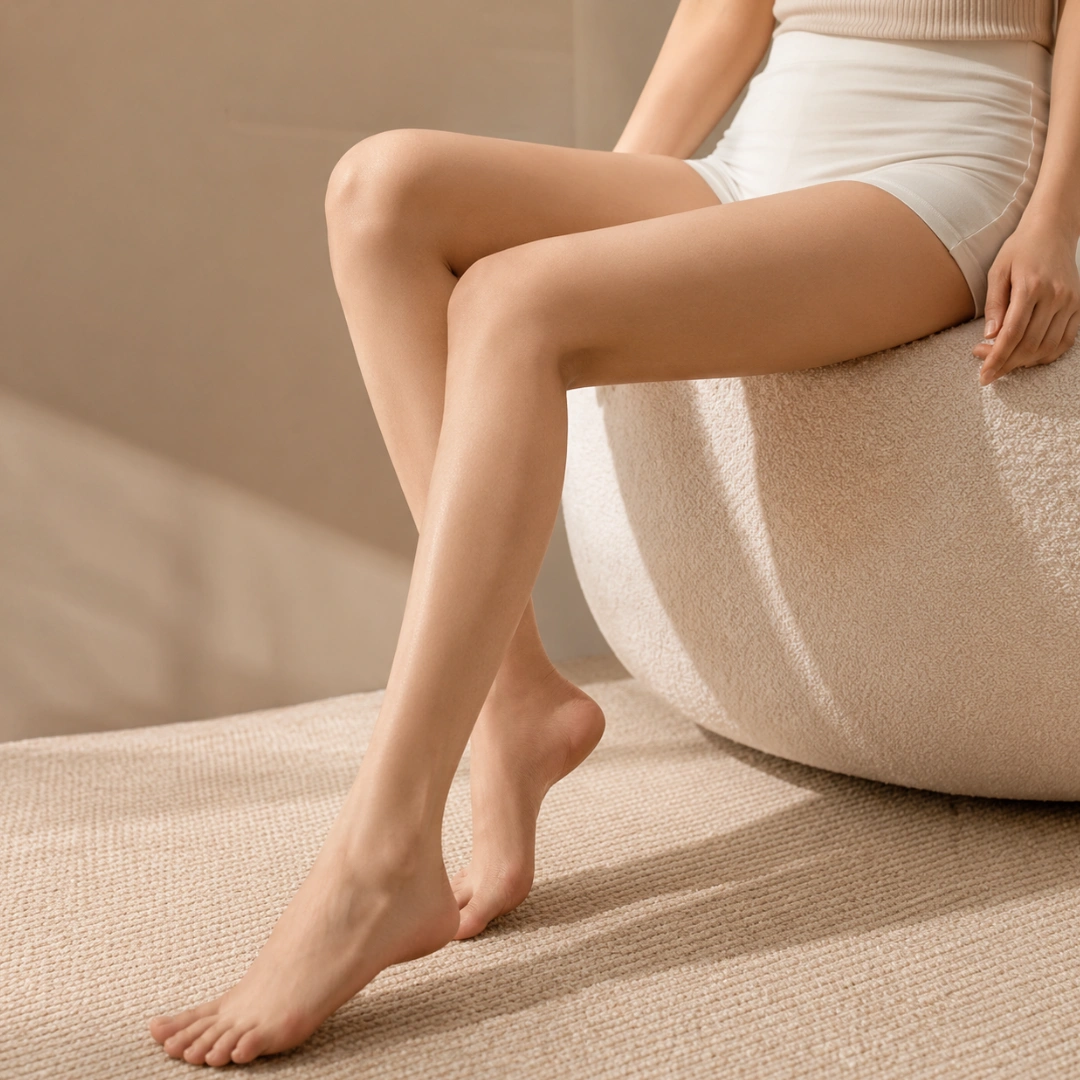
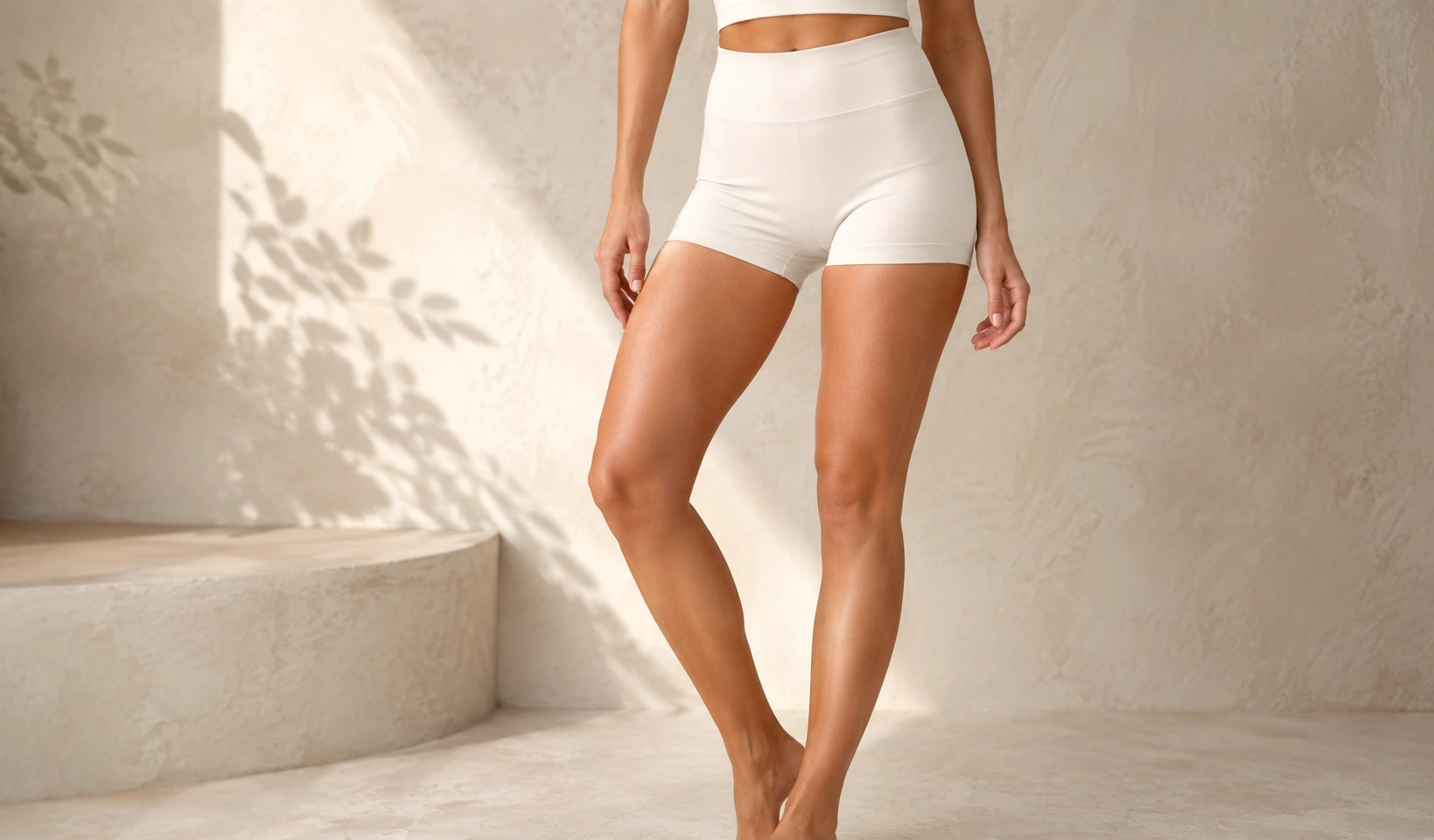
Thigh fullness can remain noticeable even after weight loss because the area is influenced by genetics, natural fat distribution, muscle shape, skin firmness and body structure.
Inner-thigh fullness, outer-thigh bulges, front-thigh muscle prominence and back-thigh skin texture are different concerns. Identifying the dominant issue is more useful than treating every thigh concern as “fat”.
Quick answer
Thigh fat cannot be spot-reduced through leg exercises alone. Sustainable overall fat management is the foundation, while selected body-contouring treatments may be considered for suitable localised concerns after an individual assessment.
Which Part of Your Thighs Is the Main Concern?
The location and type of concern affect which lifestyle or treatment approach may be more appropriate.
01
Inner-thigh fullness
May involve pinchable fat, skin friction or reduced firmness along the inner thighs.
02
Outer-thigh bulges
Localised fullness around the outer thighs, sometimes described as saddlebags.
03
Front-thigh prominence
Can reflect fat, strong quadriceps muscles or a combination of both.
04
Back-thigh texture
Often overlaps with cellulite appearance, reduced skin firmness or tissue irregularity.
A proper assessment helps distinguish fat from muscle, skin laxity and temporary fluid retention before any treatment is recommended.
What Actually Helps Slimmer-Looking Thighs?
No single workout or treatment changes every thigh concern. A realistic plan usually combines three foundations:
Foundation 01
Overall fat management
Use a sustainable eating pattern instead of crash dieting or aggressive short-term restriction.
Foundation 02
Lower-body strength
Build balanced muscle tone through controlled resistance training and regular movement.
Foundation 03
Concern-specific treatment
Match the treatment to fat, firmness, texture or muscle definition rather than choosing by trend.
A Practical Thigh-Slimming Plan
1. Use sustainable fat-loss habits
Reducing overall body fat generally requires a consistent calorie deficit over time. Extreme diets are unnecessary and do not guarantee that the thighs will change first.
Include protein in each main meal.
Choose vegetables, fruit and higher-fibre carbohydrates regularly.
Watch liquid calories from sweetened drinks and alcohol.
Keep portions realistic when eating out.
Focus on habits you can maintain long term.
2. Combine cardio with lower-body strength training
Cardio supports overall energy expenditure, while strength training can improve lower-body shape and definition.
Brisk walking, cycling or swimming.
Squats and supported sit-to-stands.
Lunges and step-ups.
Glute bridges and hip thrusts.
Romanian deadlifts with suitable resistance.
3. Review skin firmness and cellulite separately
Fat reduction, skin firming and cellulite improvement are not identical goals. A device that targets a fat bulge may not be the strongest option for texture, while a skin-focused treatment may not meaningfully reduce a larger area of fullness.
Which LAVAĒ Treatments May Be Considered?
LAVAĒ offers several non-invasive technologies that may be discussed for different thigh concerns. The table below explains the primary difference between them.
The area is suitable for a treatment plan using this technology.
The correct treatment depends on tissue thickness, skin condition, muscle shape, health history, target area and realistic goals. A device should not be selected based only on popularity or social-media results.
Can Thigh Treatments Create a Thigh Gap?
No responsible treatment should guarantee a thigh gap. The space between the thighs is influenced by pelvic width, bone structure, muscle shape, fat distribution and natural anatomy.
A more realistic goal is improved contour, reduced localised fullness or better definition—not changing skeletal structure.
Who May Be Suitable for Thigh Contouring?
It may be considered when
Your weight is relatively stable.
The concern is a selected localised area.
You understand that results vary.
You want contouring rather than major weight loss.
No relevant contraindications are identified.
It may not be appropriate when
The concern is obesity or a medical cause of leg enlargement.
You are pregnant.
There is unexplained swelling or persistent pain.
You have an active skin condition in the area.
A device-specific or medical contraindication applies.
Not sure whether the concern is fat, muscle or skin?
A LAVAĒ consultation can help identify the dominant thigh concern before a suitable technology and treatment plan are discussed.
You cannot control exactly where your body loses fat first. Overall fat management can reduce body fat over time, while non-invasive body contouring may be considered for selected pockets of subcutaneous thigh fat.
Why are my thighs still large after losing weight?
Thigh size is influenced by genetics, fat distribution, muscle mass, bone structure, skin firmness and fluid retention. An assessment can help distinguish between fat, muscle and skin-related concerns.
Which treatment is best for slimming thighs?
The suitable option depends on whether the main concern is localised fat, cellulite appearance, skin laxity or muscle definition. Onda Pro, Cryo 360, HIFU, INDIBA or Emshape may be discussed for different concerns.
Can thigh slimming treatments replace exercise?
No. Treatments may complement a healthy lifestyle but do not replace balanced nutrition, regular movement or strength training.
How many thigh contouring sessions are needed?
The number varies by treatment technology, tissue characteristics, treatment area and individual response. A personalised plan should be discussed after assessment.
Editorial note: This guide provides general information and does not replace medical advice. Treatment suitability, expected progress and contraindications should be assessed individually. Persistent pain, sudden swelling or unexplained changes in leg size should be reviewed by an appropriate healthcare professional.
“Slimmer-looking thighs require the right distinction between fat, skin, muscle and natural body structure.”