Home-Body Guides-Loose Skin After Weight LossLoose Skin After Weight Loss
Loose Skin After Weight Loss
Loose Skin After Weight Loss in Singapore: What Can Help?
Published 19 November 2026
9-minute read
Skin Firmness & Weight Loss
Losing weight can be a meaningful achievement, yet the skin around your tummy, arms or thighs may not feel as firm as expected. Here is how to distinguish skin laxity from remaining fat and understand which next steps may be realistic.
Quick answer
Loose skin after weight loss is not always the same as stubborn fat. Skin may retract gradually, but the extent depends on age, genetics, sun exposure, weight change and skin condition. Non-surgical firming treatments may help selected mild concerns; they cannot reliably remove substantial excess skin. A personalised assessment is needed.
Why Does Skin Become Loose After Weight Loss?
Skin contains collagen and elastin fibres that contribute to its stretch and recoil. When body size changes, the skin may not fully match the new contours. The amount of weight lost, how long the skin was stretched, age, genetics, smoking, sun exposure and skin quality can all influence the appearance.
Skin can change over time after weight stabilises, but there is no reliable universal timetable for tightening. Creams, exercise and non-surgical devices do not remove large folds of excess skin.
Loose Skin, Remaining Fat or Reduced Muscle Tone?
Different concerns can appear similar in photographs. The most useful next step is identifying what is contributing to the contour rather than choosing a treatment by its name.
Concern
Common appearance
What to consider
Skin laxity
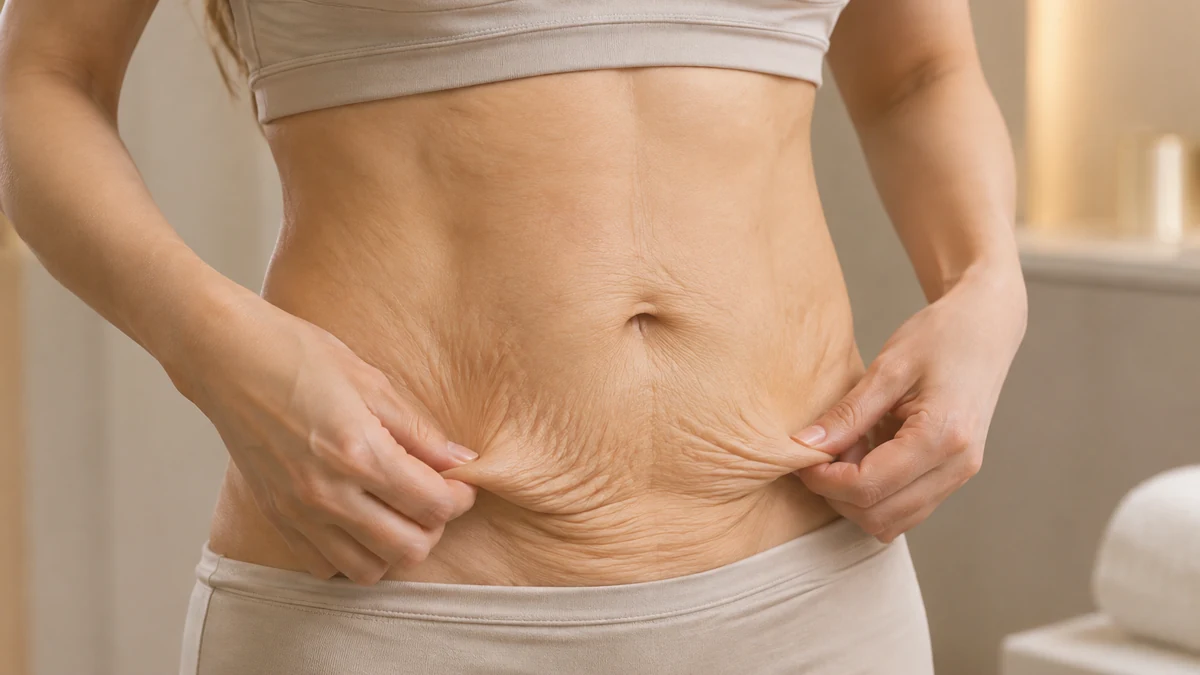
Fine folds, crepey texture or skin that appears loose when standing
Hanging folds that remain after weight stabilisation
Medical evaluation, including whether surgical removal is appropriate
This table is educational, not a self-diagnosis. Rapid swelling, pain or a changing lump requires medical advice rather than a cosmetic treatment booking.
Which Body Areas Are Commonly Affected?
01
Tummy and waist
Skin folds can remain around the lower abdomen even as the waist becomes smaller. Visceral fat is a different health issue and is not treated by body-contouring devices.
02
Upper arms
Skin can appear less firm near the triceps. Read our upper-arm guide to understand fat versus tissue firmness.
03
Inner thighs
Texture and skin elasticity may become more noticeable when the legs slim down. See the thigh guide for different thigh concerns.
04
Hips and back
Skin folds, remaining fat and normal anatomy can overlap. A body-area assessment can help distinguish them.
Can Non-Surgical Body Treatments Help?
For selected mild laxity, technologies used for body firming may be considered after a suitability review. Their mechanisms and evidence vary; none should be marketed as a substitute for removing significant excess skin.
Skin quality
INDIBA Body Contouring
A radiofrequency-based option LAVAĒ discusses for skin quality, comfort and firmer-looking contours. Explore INDIBA.
Mixed concerns
ONDA Pro
May be considered for selected body areas where localised fat, texture and firmness overlap, subject to device indications. Explore ONDA Pro.
Focused approach
HIFU Body
A focused-ultrasound category that may be considered for specific concerns after assessment. Explore HIFU Body.
Suitability depends on health history, the device and settings, treatment area, expectations and practitioner judgement. Do not assume a machine can restore skin to its pre-weight-loss appearance.
What Can You Do Before Considering Treatment?
Helpful steps
Allow time for weight to stabilise and consider strength training for muscle health.
Maintain adequate nutrition and hydration; protect exposed skin from sunlight.
Take progress photos under consistent conditions if you choose to monitor appearance.
Discuss persistent rubbing, irritation or hanging folds with a medical professional.
Avoid assuming
Exercise alone can remove excess skin.
A non-surgical device replaces surgery for substantial folds.
Everyone will respond to the same number of sessions.
What Happens at a LAVAĒ Body Assessment?
At LAVAĒ Sculpt in Orchard, Singapore, a consultation should begin with your concern and relevant history: where the laxity appears, whether weight has stabilised, whether a pinchable fat pocket remains and what outcome you consider worthwhile.
The practitioner can then explain the realistic role and limitations of body skin tightening and other non-invasive body treatments. Where significant excess skin or a medical concern is present, a healthcare referral may be more appropriate.
Discuss Loose-Looking Skin at LAVAĒ
Explore whether a non-invasive body treatment is appropriate for your skin-firmness concern. We will discuss expectations and limitations before recommending a course.
People often describe any fold around the lower abdomen or upper arms as “loose skin”, but the appearance may involve several layers. Skin laxity describes reduced elasticity or excess skin, while subcutaneous fat sits beneath the skin. A person can have both at the same time. The distinction matters because a treatment aimed mainly at localised fat does not automatically correct significant excess skin.
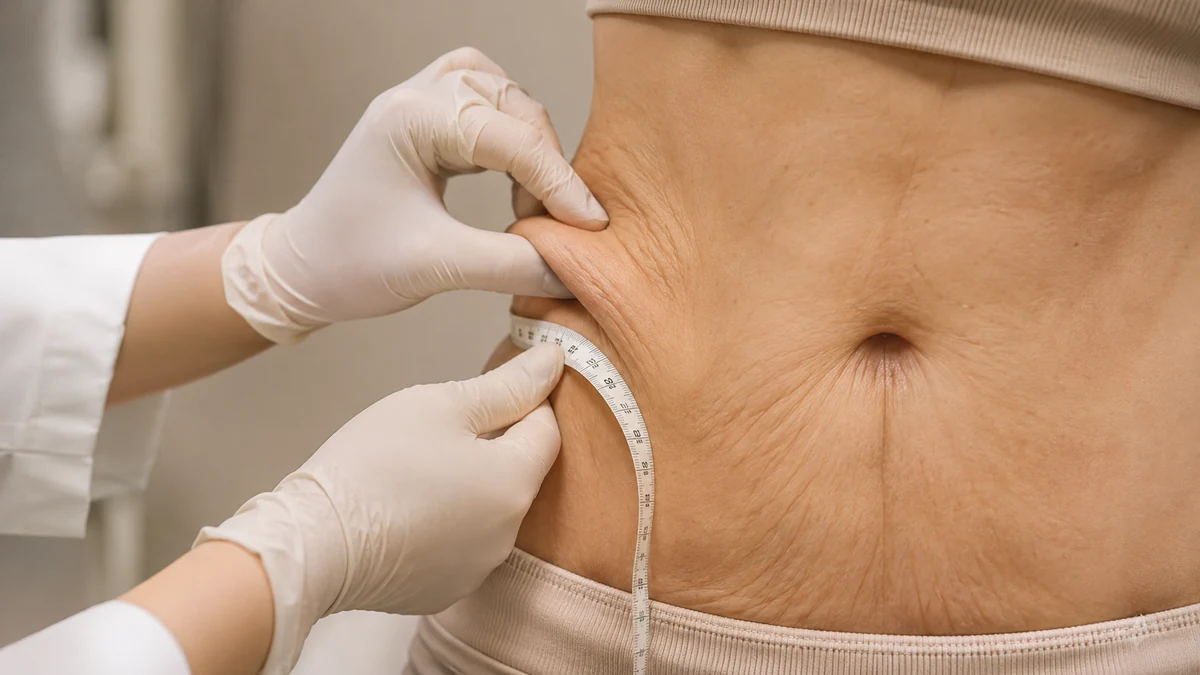
Notice how the area behaves in everyday positions. Fine creasing when you bend, a thin fold that hangs when upright, and tissue that feels soft or full can point towards different contributing factors. These observations can help frame your questions but are not a home diagnostic test. Stretch marks, prior pregnancies, weight-loss history and natural changes with age can also affect texture and elasticity.
When speaking with a practitioner, ask them to explain which part of your concern appears to be skin, which may be fat, and whether the underlying muscles or posture affect the contour. Avoid deciding on a device solely because an online image seems similar to your body.
What Non-Surgical Skin Tightening Can — and Cannot — Do
Non-surgical approaches can be considered for selected mild or moderate aesthetic concerns, depending on the technology, treatment site and individual suitability. Some energy-based procedures are designed to influence skin appearance through controlled heating or other mechanisms. Improvements, where they occur, may be gradual and modest rather than immediate or dramatic.
Significant hanging skin after substantial weight loss is a different situation. A device should not be presented as an alternative that reliably removes large amounts of excess tissue. A qualified medical professional may be the more appropriate person to discuss surgical options, particularly when skin folds lead to irritation, recurring rashes or practical discomfort.
For LAVAĒ's services, readers can start with the body skin tightening overview and then review the particular treatment's suitability information. The existence of a device on a treatment menu is not proof that it is appropriate for every person or every area.
Supportive Habits That Matter After Weight Loss
Keeping your weight relatively stable gives you a clearer baseline for evaluating your skin over time. Repeated large fluctuations can change how skin drapes and can make it difficult to judge whether a cosmetic intervention is helping. Strength training may improve the appearance of underlying muscle and physical function, but it cannot literally remove surplus skin.
Balanced nutrition, adequate protein, appropriate activity and protection from excessive ultraviolet exposure all contribute to general health and skin care. Moisturisers may make dry skin feel smoother and more comfortable, yet topical products should not be expected to eliminate marked laxity. It is useful to separate improvements in surface feel from structural tightening.
If your weight loss was recent, discuss an appropriate observation period and any relevant medical concerns with your healthcare professional. If weight changes are ongoing, a more conservative plan may be preferable to rushing into a cosmetic course.
A Practical Consultation Checklist for Singapore Readers
Bring a short summary of when the concern began, whether your weight is still changing, which areas bother you, and the outcome you would regard as worthwhile. Ask for the actual device and applicator to be identified, the reason it is being recommended, common side effects, contraindications, expected downtime and the approach to follow-up.
It is also reasonable to ask how improvements will be evaluated. Consistent photographs, the same posture and lighting, and a realistic review interval are more informative than a dramatic image captured at a different angle. Be cautious of promises to “tighten everything” or guarantee a particular measurement reduction.
At LAVAĒ, a body consultation should connect the cosmetic concern to a defined goal, not push every customer towards the same package. For related concerns, explore the body contouring and fat reduction information to understand why treatment categories are not interchangeable.
Frequently Asked Questions
Will loose skin tighten naturally after weight loss?
Some skin may retract over time, but the degree is unpredictable and depends on the individual. Significant loose folds may not resolve without medical treatment.
Can ONDA Pro remove loose skin?
ONDA Pro may be considered for selected contouring and firmness concerns. It does not surgically remove excess skin, and outcomes are not guaranteed.
Is INDIBA suitable for skin firmness after weight loss?
INDIBA is a radiofrequency-based treatment that may be discussed for selected skin-quality and firmness concerns. A consultation is needed to determine suitability.
Do I need surgery for loose skin?
Not everyone does. Significant hanging skin may require surgical evaluation if removal is the goal, particularly if it causes persistent irritation.
Is loose skin the same as belly fat?
No. Skin laxity and subcutaneous fat are different, although they can occur together and need different approaches.
Editorial note: This educational guide is not a diagnosis, a quotation or a guarantee of treatment outcomes. Device indications, contraindications and risks differ. Seek professional medical advice for symptoms or health conditions and consult the treating team before any cosmetic procedure.