How to Reduce Bra Bulge & Back Fat in Singapore: Causes, Exercise & Body Contouring Options
Updated 13 September 2026
9-minute read
Body Concerns
Bra-line and upper-back fullness can look like one simple “fat problem”, but the visible fold may involve subcutaneous fat, skin, clothing compression or tissue close to the underarm. Here is how to tell the difference before choosing a body treatment.
Quick answer
Bra bulge usually refers to a visible fold around the
upper back, bra line or side of the chest.
If the issue is a localised, pinchable fat pocket at a stable weight,
non-invasive body contouring
may be considered. If the area is mostly loose skin—or the fullness is new,
hard, painful or one-sided—the correct next step is different.
What Is Bra Bulge or Back Fat?
“Bra bulge” is a non-medical term used for visible folds or fullness around the upper back, bra line and side of the chest. Depending on the person, the appearance may come from subcutaneous fat, natural skin folds, skin laxity, clothing compression or a combination.
It is also useful to separate the upper-back/bra-line region from the waist. A love handle sits lower around the flank, while bra-line fullness is usually higher around the ribs, upper back or side chest.
Why Does Bra-Line Fullness Happen?
01
Subcutaneous fat distribution
Some people naturally store more soft fat across the upper back and lateral chest. The pattern can remain visible even when overall weight is relatively stable.
02
Skin folds and elasticity
The back moves through bending, twisting and shoulder movement. Natural folds can become more visible when skin is less firm or when soft tissue is compressed.
03
Clothing compression
A fitted bra or top can make an existing tissue fold easier to see. The garment is revealing the contour; it is not creating body fat.
04
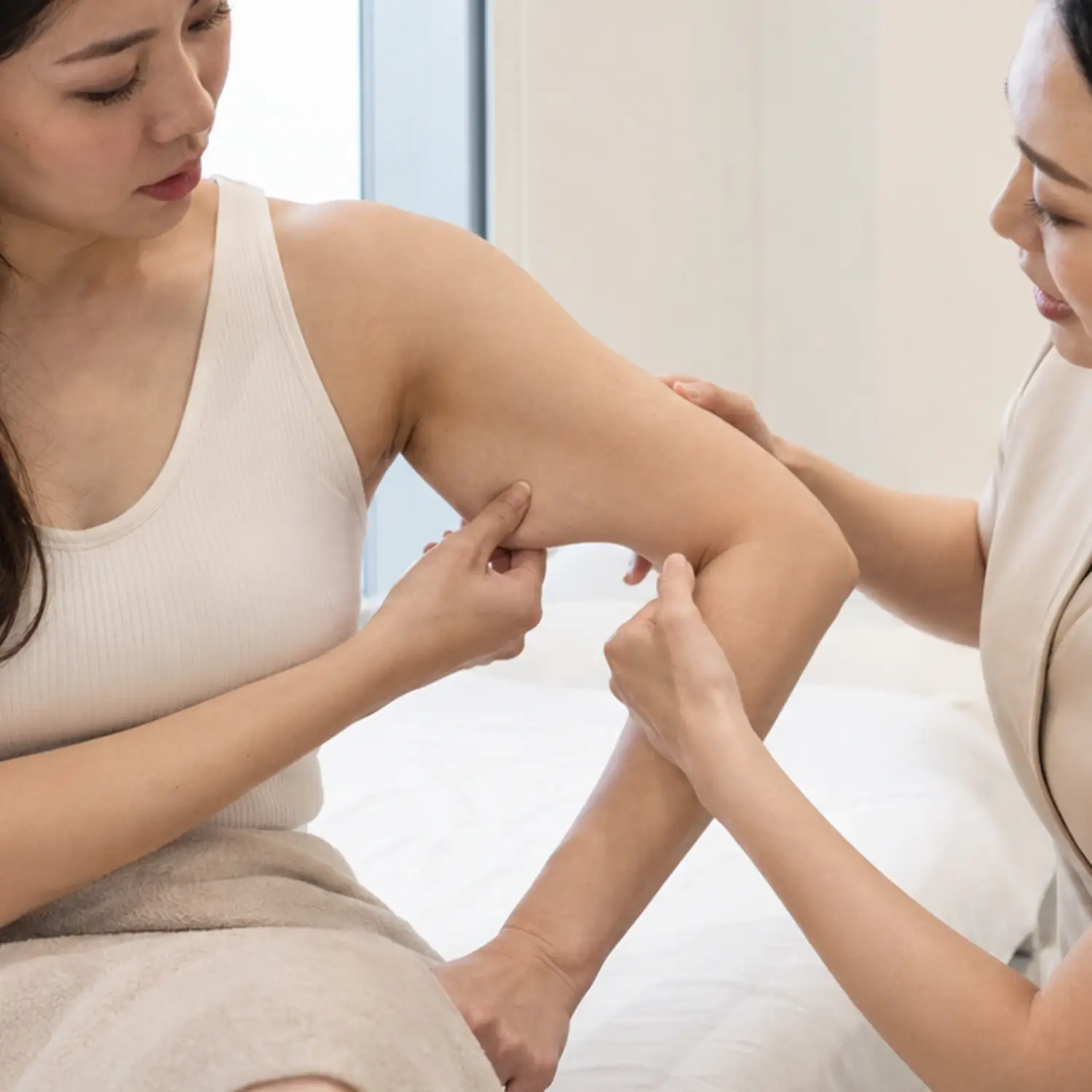
Not every underarm bulge is fat
Fullness very close to the breast or armpit can have other causes. A new, hard, painful or one-sided lump belongs in a medical assessment, not a slimming consultation.
Rows, pulldowns, rear-delt work and other resistance exercises can strengthen the muscles beneath the upper back. That can improve posture, shoulder positioning and muscle definition.
But training one region does not guarantee that the body will remove fat from that exact region. Evidence on spot reduction is inconsistent, so exercise should be viewed as part of an overall body-composition strategy rather than a precise eraser for one fold.
What exercise can change
Exercise can make the upper back stronger and more defined. If a distinct pinchable fat fold remains after your overall body composition is stable, that becomes a different question: whether localised body contouring is appropriate.
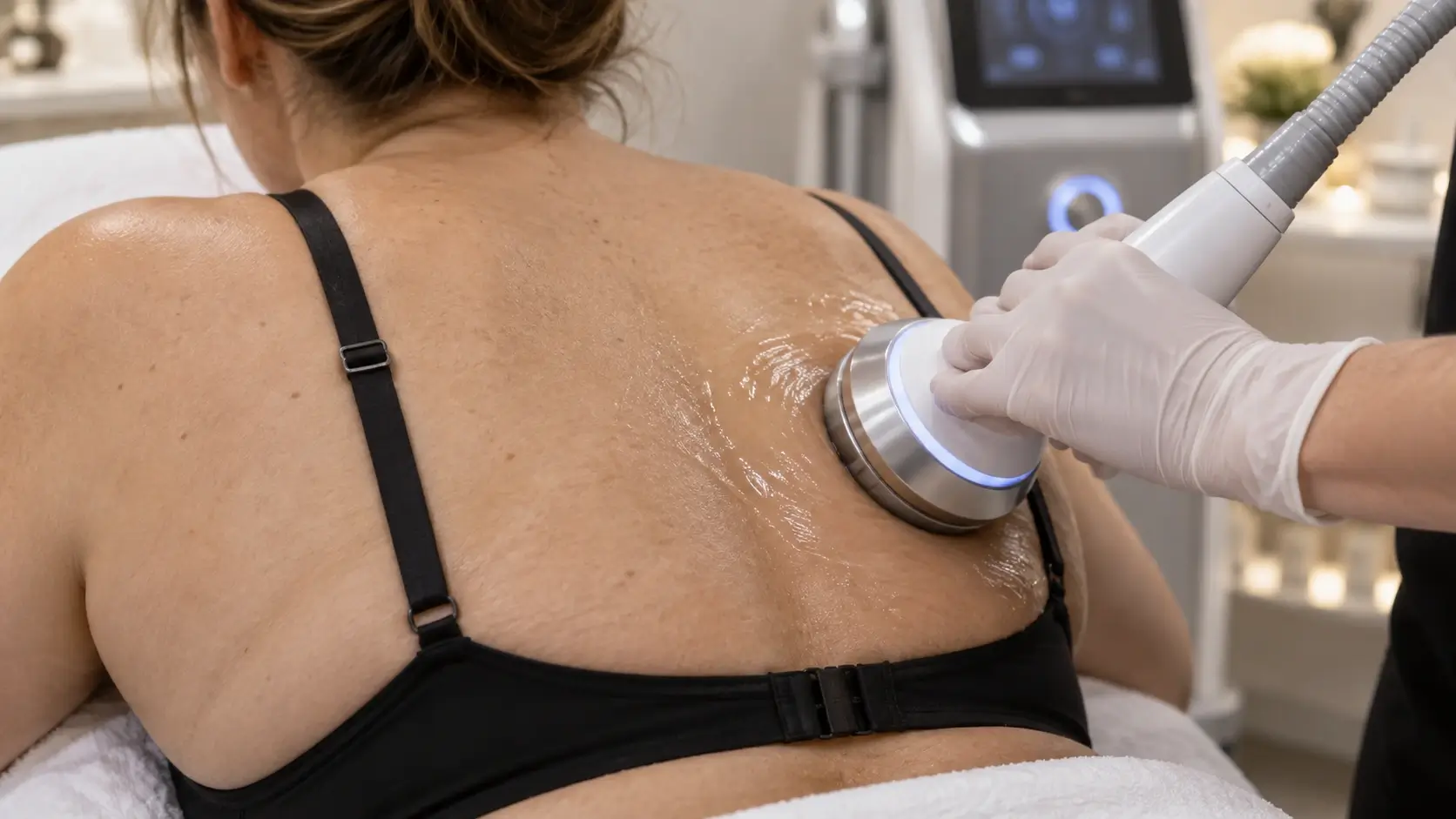
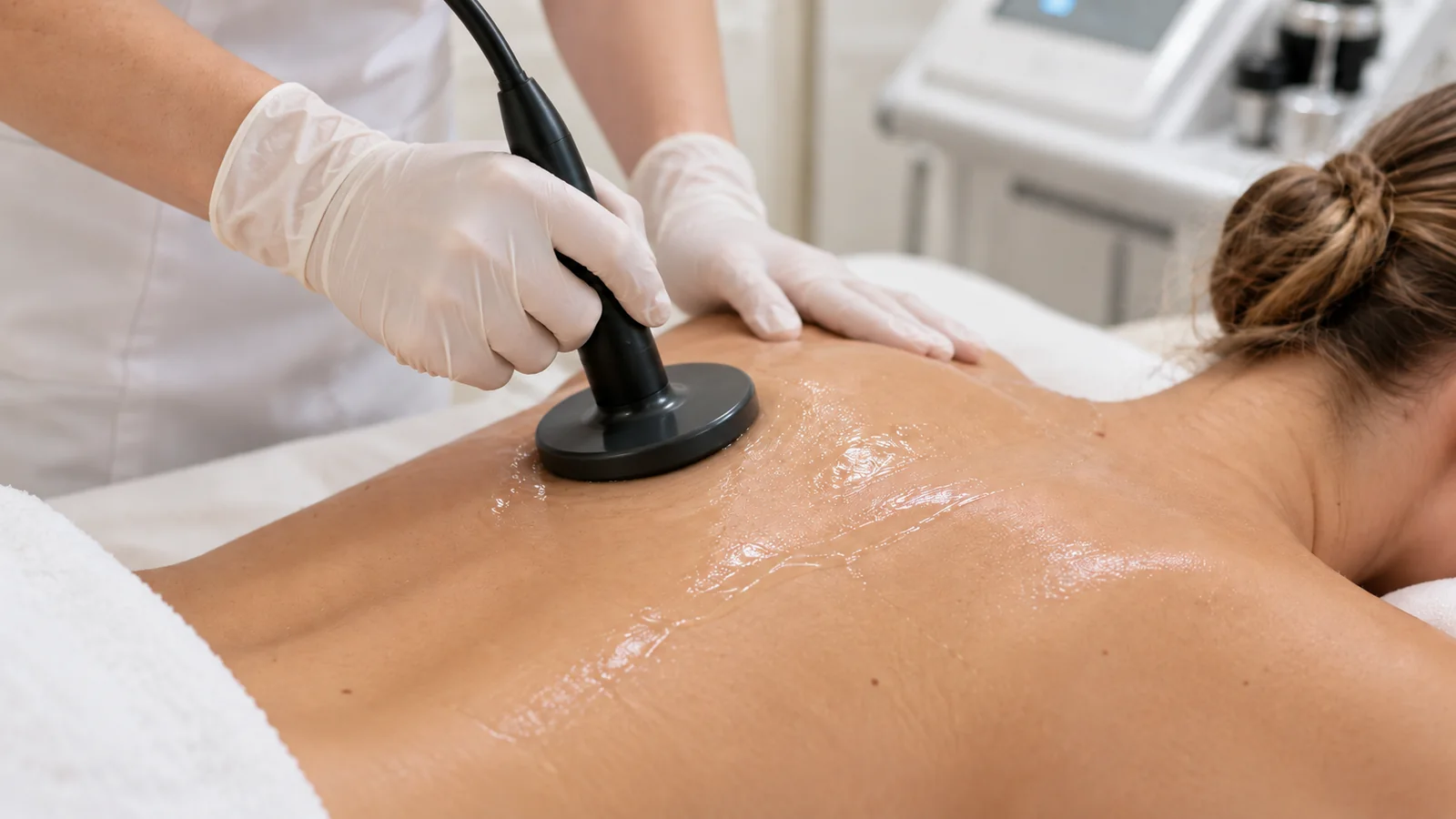
Non-Surgical Options for a Localised Bra-Line or Back-Fat Concern
Non-surgical body treatments can target
different concerns, so the right approach depends on what is actually creating
the bra-line fold. A localised fat pocket may require a different pathway from
loose-looking skin, cellulite-like texture or limited muscle definition.
The U.S. FDA groups non-invasive body contouring technologies by the effects
they are designed to create, including reducing small visible fat bulges,
changing circumference, improving muscle tone or improving cellulite appearance.
The goal is therefore not to use the most treatments possible, but to select
the most appropriate pathway for the tissue and target area.
Other LAVAĒ technologies, including INDIBA Body Contouring, may be considered according to the goal and assessment. More machines are not automatically better; the point is to select a pathway that matches the dominant concern.
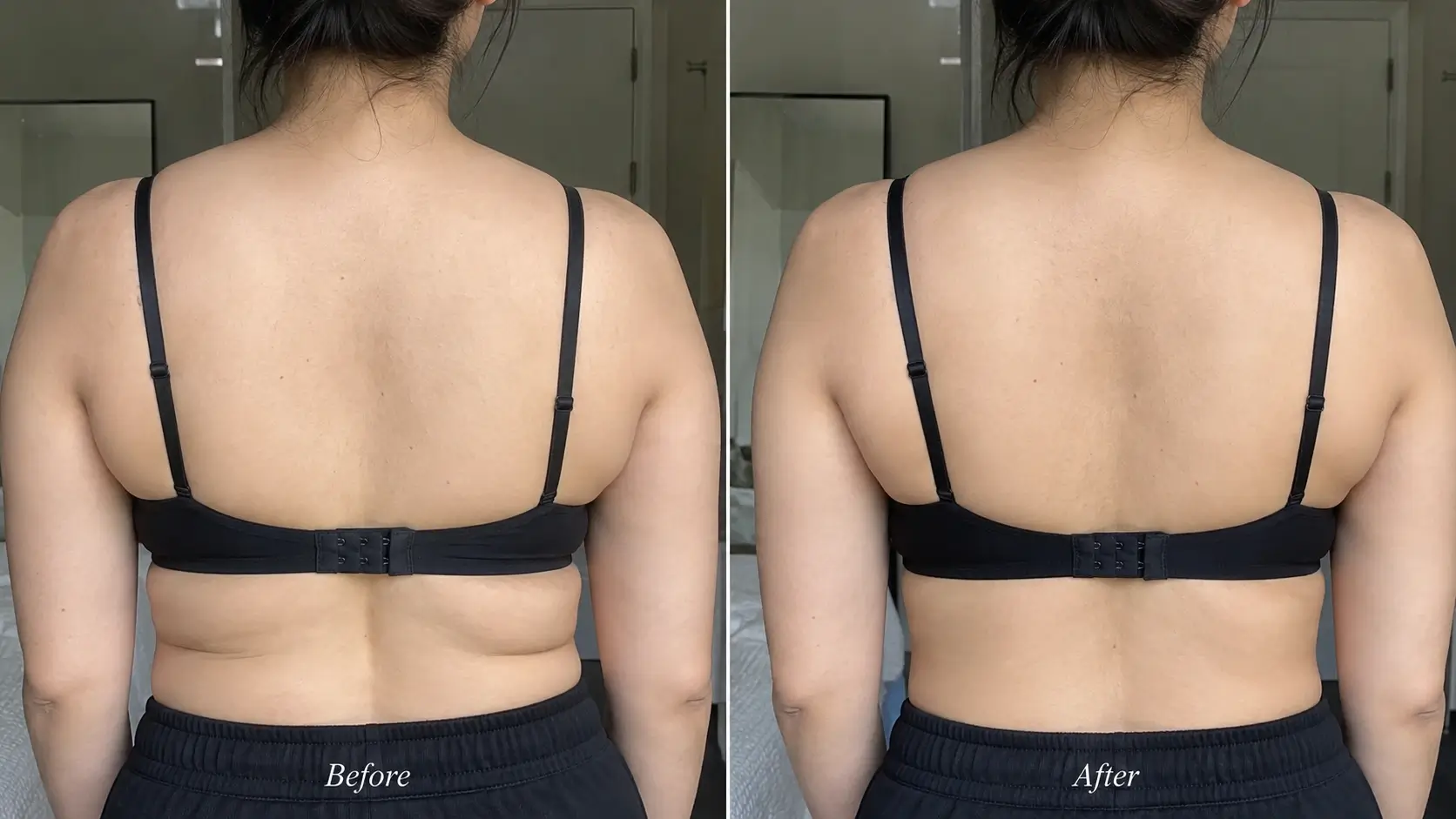
What Can a More Refined Bra-Line Contour Look Like?
When the concern is primarily a localised pocket of soft tissue around the
bra line or upper back, the goal of treatment is usually a
smoother transition across the back and bra-line area rather
than dramatic overall weight loss.
Illustrative visual showing the type of contour improvement people may
seek around the bra-line and upper-back area. Individual treatment response
and results vary.
A suitable result depends on the starting concern. Someone with a clearly
pinchable fat pocket may follow a
fat-reduction pathway,
while someone whose main concern is loose-looking skin may be better suited to
a skin-tightening approach.
Which Back Areas Are People Usually Referring To?
Upper-back roll: the fold running across or beside the bra line.
Posterior bra bulge: fullness behind the side of the bra band.
Lateral chest / underarm fullness: closer to the armpit and breast; this area needs more care because not every bulge is simply fat.
Lower back / flank: usually closer to the waist and more appropriately grouped with love handles.
Using the correct area description during consultation matters because a treatment suitable for a lower flank fat pocket may not automatically be suitable for tissue close to the armpit or breast.
Who May Be Suitable for Back-Fat Body Contouring?
May be worth assessing when
Your overall weight is relatively stable.
The fullness is soft, localised and cosmetic in nature.
You understand that body contouring produces local contour change, not major weight loss.
The selected device can be used appropriately on that exact area.
Seek another assessment first when
The underarm or side-chest fullness is new, painful, hard or strongly one-sided.
You are mainly seeking overall weight loss.
The dominant issue is significant excess skin rather than a small fat pocket.
You have a contraindication relevant to the proposed technology.
How to Choose Without Over-Treating the Area
A useful assessment should answer four things before recommending a package:
Is the visible fold mainly fat, skin or both?
Is the tissue safely within the treatment area for the selected device?
Is there enough pinchable tissue for a fat-focused approach?
Would changing fat volume alone actually improve the contour you dislike?
If the concern is actually more about muscle definition than fat volume, read our fat reduction vs muscle toning guide before deciding on a body-sculpting plan.
Want to know what is actually creating the bra-line fold?
A personalised LAVAĒ body assessment can help separate localised fat from skin laxity and other causes before a suitable contouring pathway is discussed.
Bra-line and upper-back bulges commonly involve subcutaneous fat, natural skin folds and individual body-fat distribution. Clothing can make an existing fold more visible, but a tight bra does not create fat. Fullness close to the armpit can also have non-fat causes, so a new, painful or one-sided lump should be medically assessed.
Can back exercises get rid of bra bulge?
Back and shoulder exercises can strengthen muscle and improve posture and definition, but they do not guarantee selective fat loss from the exact bra-line area. Overall body-composition change remains important when the fullness is part of general fat gain.
Is bra bulge the same as armpit fat?
Not always. Bra bulge often refers to folds along the upper back or side of the chest where clothing compresses the tissue. Armpit fullness can involve subcutaneous fat but may also include normal breast-related tissue or another structure, so location matters.
What is the best non-surgical treatment for back fat in Singapore?
There is no universal best option. A distinct pinchable fat pocket, diffuse
upper-back fullness, skin laxity and cellulite-like texture may require different
approaches. LAVAĒ offers several
non-surgical body treatments,
and the appropriate option depends on the tissue, exact treatment area,
device suitability and realistic treatment goals.
Can fat freezing be used for back or bra-line fat?
Cryolipolysis is designed for selected pinchable subcutaneous fat bulges. Whether a bra-line or back area is suitable depends on the specific device, applicator fit, tissue characteristics and contraindications, so an assessment is required.
Does body contouring treat visceral fat?
No. Non-invasive body contouring targets selected tissue near the body surface. It does not treat visceral fat around the internal organs and is not a substitute for overall weight management.
When should armpit or bra-line fullness be checked by a doctor?
Seek medical assessment if the fullness is new, hard, painful, red, rapidly changing, strongly one-sided or associated with another breast or underarm symptom. A cosmetic body assessment should not be used to diagnose a lump.
Editorial note: This guide is general educational information, not medical advice. A new, painful, hard or one-sided underarm or side-chest lump should be medically assessed rather than assumed to be cosmetic fat. Non-invasive body contouring is not a treatment for obesity or visceral fat.