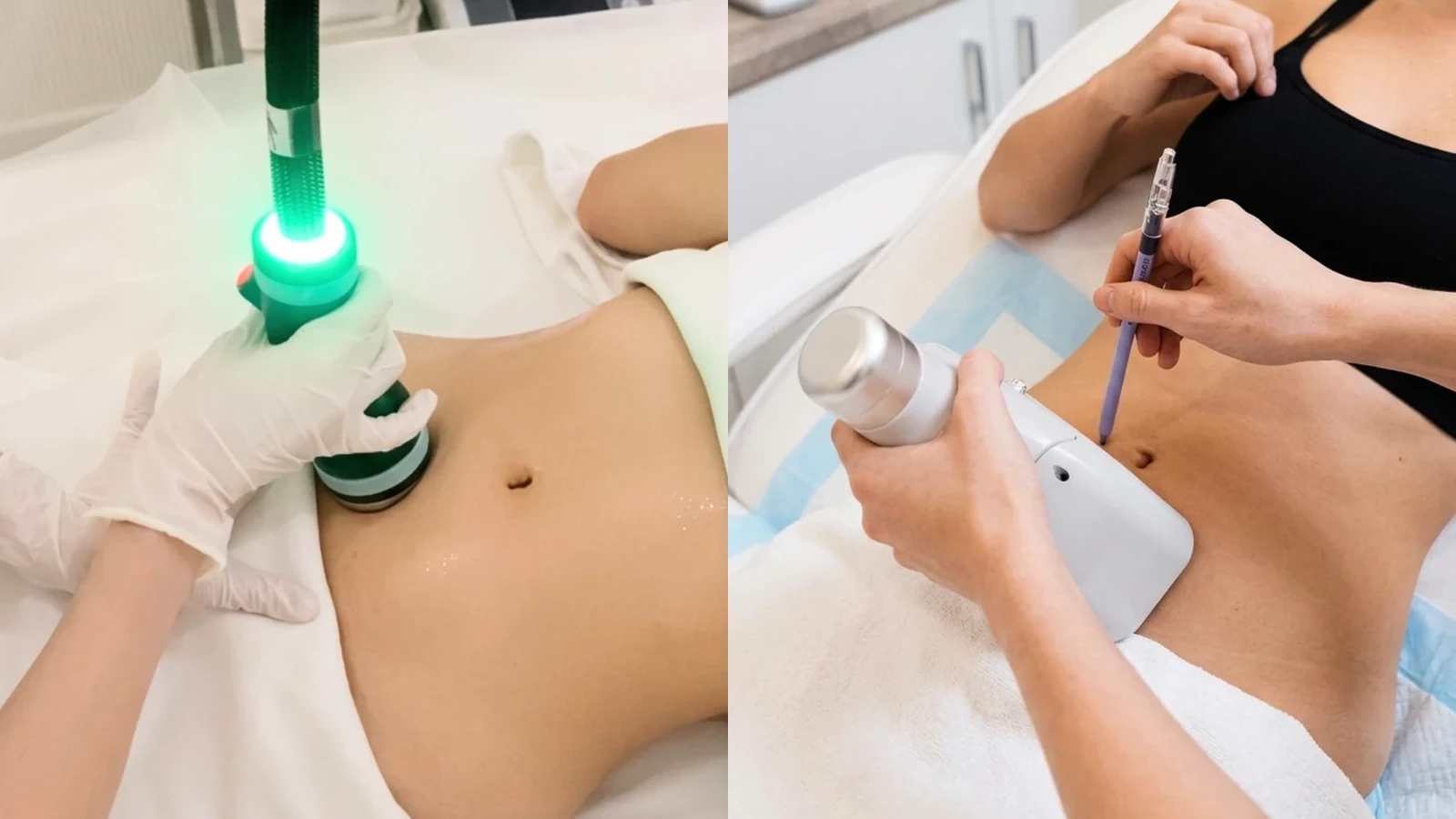
Fat Reduction vs Muscle Toning: Which Body Treatment Is Right for Your Goal?
Updated 15 September 2026
10-minute read
Treatment Guide
A flatter body and a more defined body are not always the same goal. Fat reduction changes the layer above the muscle; muscle toning changes the muscle underneath it. Knowing which tissue is limiting your result can prevent you from choosing the wrong treatment.
Quick answer
Choose the pathway based on the
dominant tissue and visual goal.
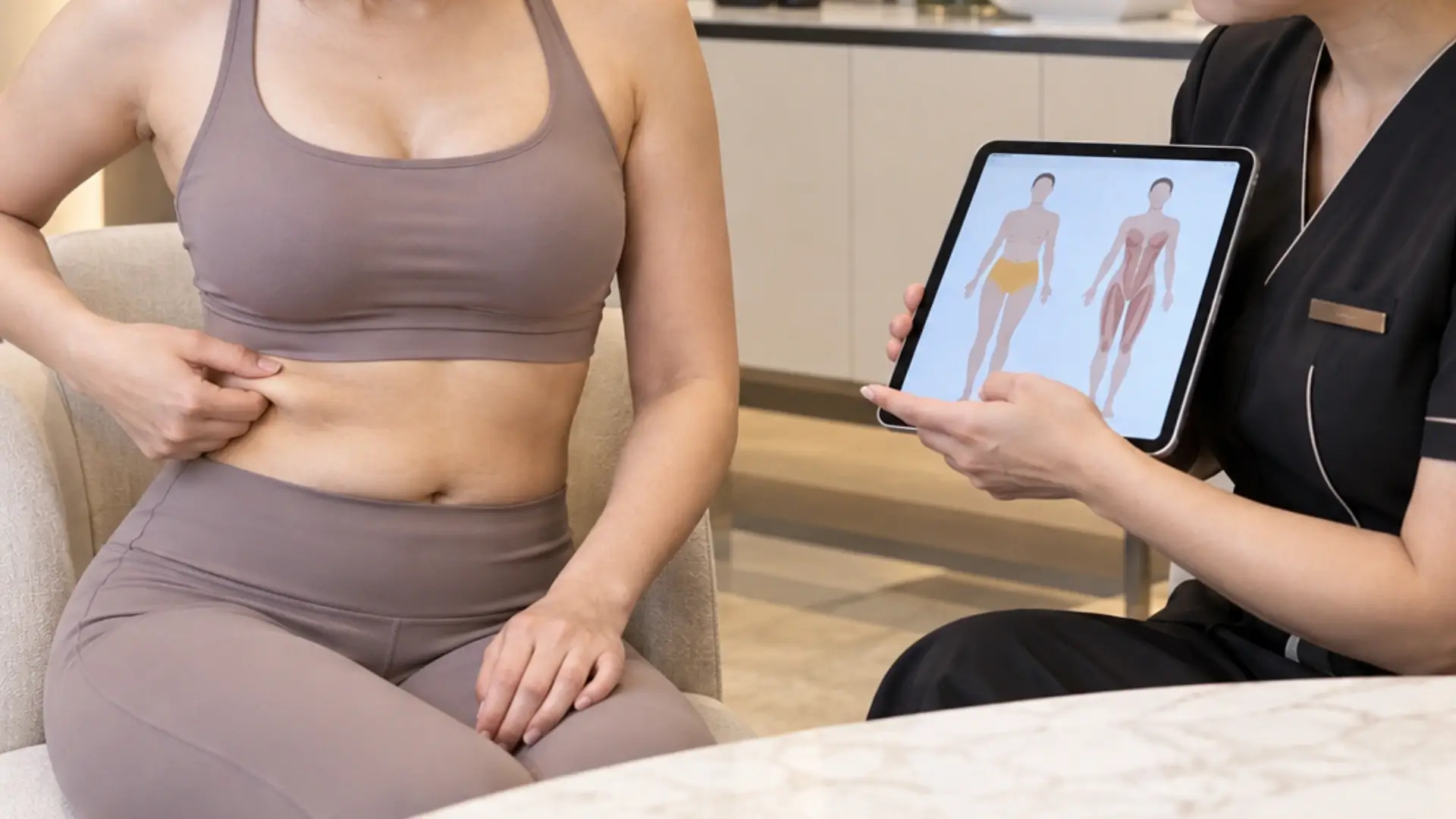
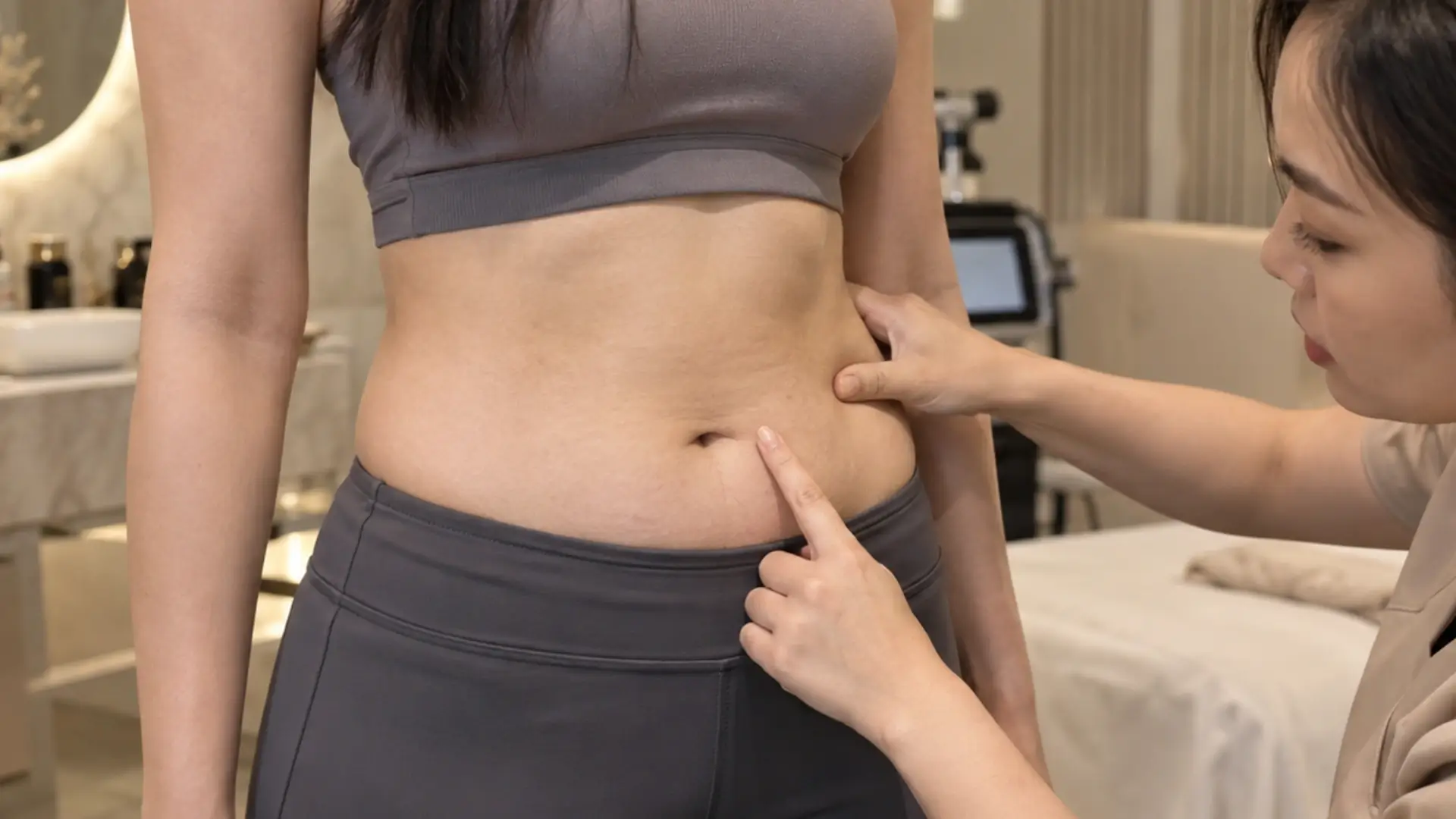
If a pinchable fat layer is hiding the contour,
fat reduction
may be more relevant.
If there is relatively little fat but limited firmness or definition,
resistance training or a
muscle-toning pathway
may make more sense.
If both contribute, a staged or combined plan may be discussed.
Fat Reduction vs Muscle Toning: What Is the Difference?
These terms are often grouped together under “body sculpting”, but they describe different biological targets.
Comparison
Fat reduction
Muscle toning
Primary target
Subcutaneous adipose tissue
Skeletal muscle
Main visual goal
Reduce a selected bulge or circumference
Improve firmness, contraction and definition
What it does not do
Does not build muscle
Does not replace overall fat loss
Typical clue
There is a noticeable pinchable fat layer
There is relatively little fat but limited definition
If the area has a clear layer of subcutaneous fat, a fat-reduction assessment may be more relevant than adding stronger muscle contractions underneath it.
02
Little fat, limited definition
If the tissue is already relatively lean but lacks shape, resistance training or a muscle-focused pathway may make more sense.
03
Fat hides existing muscle
Muscle may already be present but not visually obvious because of the fat layer above it. Reducing selected fat can reveal more contour without actually creating new muscle.
04
Loose skin changes the result
If laxity is significant, a skin-tightening assessment may need to sit alongside either fat or muscle goals.
How Non-Invasive Fat Reduction Works
The U.S. FDA describes non-invasive body contouring as changing the shape of an area without surgically removing tissue. Depending on the technology, selected fat bulges may be targeted using controlled cooling, heat or ultrasound.
Reducing a small fat bulge may make the body look more contoured, but it does not build the muscle underneath. Non-invasive fat reduction is also not a weight-loss treatment.
How Muscle Toning Works
Muscle tone improves through repeated muscle contraction and adaptation. The strongest long-term foundation remains resistance training. The 2026 ACSM position stand, synthesising 137 systematic reviews and more than 30,000 participants, concluded that resistance training significantly improves muscle strength, size, power and endurance.
In non-invasive body contouring, the FDA describes pulsed magnetic-field devices as triggering electrical currents that cause repeated muscle contractions. These procedures may improve tone and firmness in selected muscles, with effects that may require maintenance.
At LAVAĒ, Emshape Body Sculpture belongs primarily to this muscle-focused category. CurvX Sculpt may also be discussed when the body-sculpting goal spans more than one tissue type.
LAVAĒ Treatment Pathways: Fat Reduction vs Muscle Toning
Different technologies target different tissues. The best starting point is
therefore not “Which machine is strongest?” but
which tissue is limiting the result you want to see.
What Can Better Body Contour and Definition Look Like?
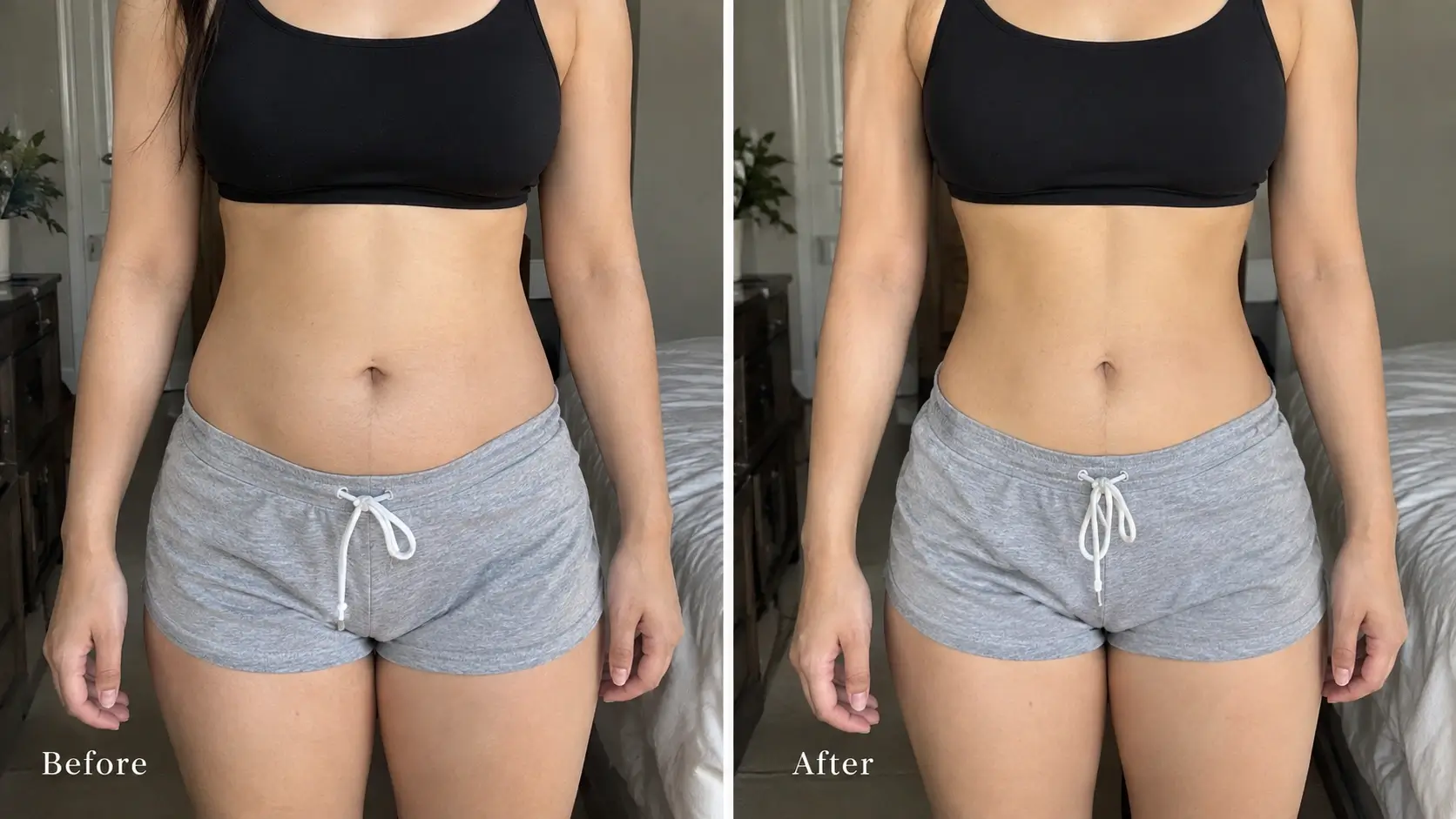
A more sculpted appearance can come from different changes.
Sometimes the visible improvement comes mainly from
reducing a layer of subcutaneous fat.
In other cases, the goal is stronger
muscle definition and firmness.
Illustrative visual showing the type of contour and definition improvement
people may seek. Individual treatment response and results vary.
If the main limitation is a noticeable pinchable fat layer,
start with the
fat-reduction pathway.
If the area is already relatively lean but lacks definition,
the
muscle-toning pathway
may be more relevant.
If both contribute, treatment may be staged rather than trying to solve
every concern with one device.
Which Should Come First?
Fat reduction may come first when
A thicker pinchable fat layer is hiding the contour underneath.
The main goal is reducing a selected bulge or circumference.
Your overall weight is relatively stable and the concern is localised.
Muscle toning may come first when
There is relatively little pinchable fat.
The main goal is firmness, contraction or visible definition.
Your priority is shape rather than reducing local fat volume.
If both issues are clearly present, a staged plan can be discussed. The sequence should be based on which tissue is currently limiting the visible result—not simply on which treatment is newest or most heavily promoted.
Can Fat Reduction and Muscle Toning Be Combined?
Potentially, yes. They are complementary precisely because they target different tissues. But “more treatment” is not automatically a better plan.
A useful combination strategy should consider the starting fat layer, the amount of muscle already present, skin quality, body area, device contraindications, training habits and the result you are trying to see.
For example, a person with a thicker abdominal fat layer may not see much visual muscle definition even if the abdominal muscles contract strongly. Another person with little abdominal fat may gain more from strengthening and hypertrophy than from trying to remove fat that is barely present.
Three Common Body-Sculpting Mistakes
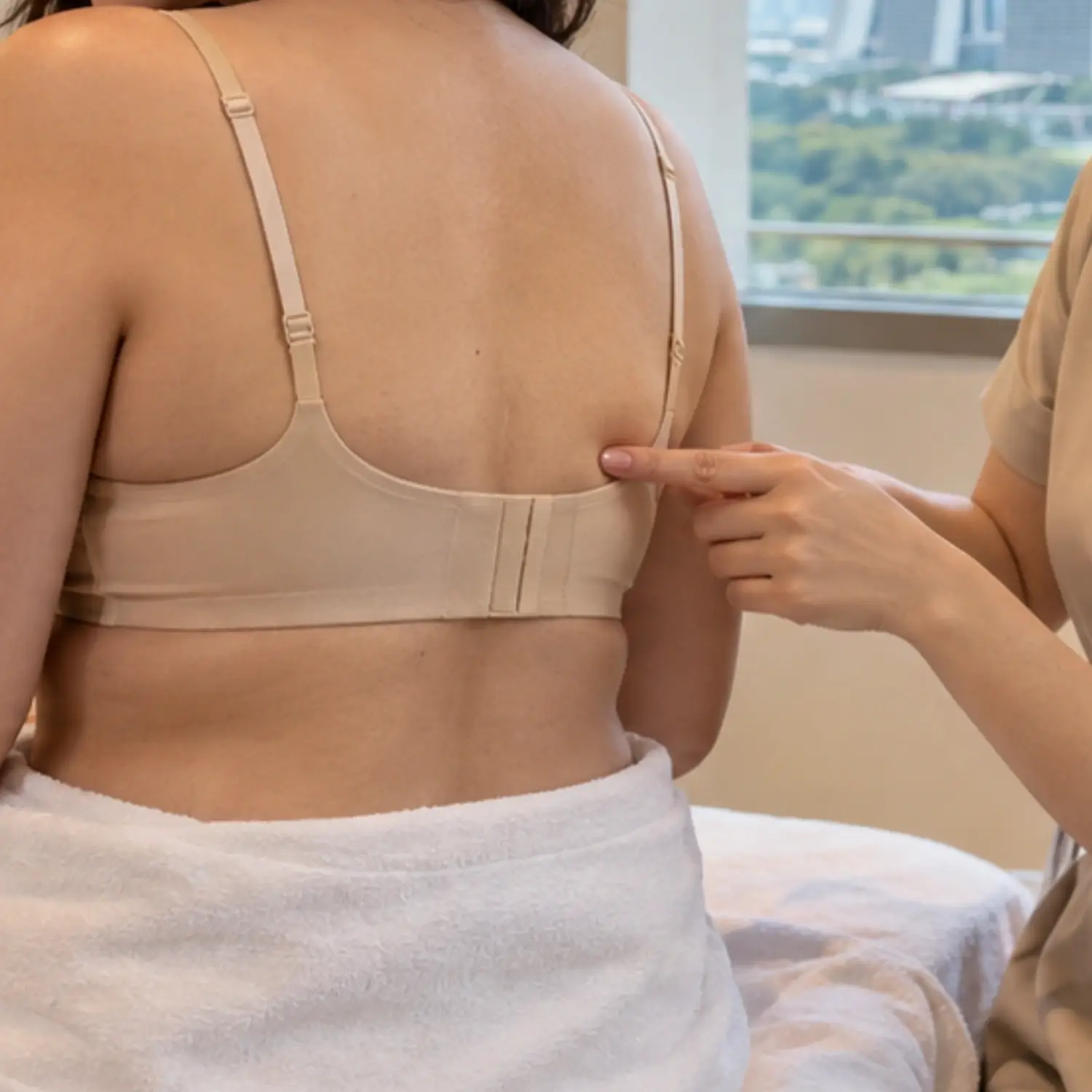
Treating every soft area as “fat”. Skin laxity, muscle definition, cellulite and fluid-related concerns can create different appearances.
Expecting fat reduction to create muscle. Less fat can reveal shape; it cannot substitute for muscle development.
Expecting muscle stimulation to produce weight loss. Muscle-focused treatments are not obesity or weight-loss treatments.
That is why LAVAĒ organises the site by body concerns as well as technologies: the goal should determine the treatment pathway, not the other way around.
Not sure whether you need less fat or more definition?
A LAVAĒ body assessment can separate fat volume, skin firmness and muscle tone so the treatment discussion starts with your actual goal.
What is the difference between fat reduction and muscle toning?
Fat reduction aims to decrease a selected layer or bulge of subcutaneous fat. Muscle toning aims to improve muscle contraction, strength, firmness or definition. They target different tissues, so one should not automatically be used as a substitute for the other.
Which should I do first: fat reduction or muscle toning?
It depends on what is limiting the visible result. If a thicker fat layer is hiding the underlying contour, fat reduction may be the first discussion. If there is little pinchable fat but limited definition, muscle-focused training or treatment may be more relevant. Some people may discuss a staged combination.
Can muscle toning treatments burn fat too?
Some body-sculpting platforms are marketed for multiple effects, but the primary biological target still matters. Magnetic-field devices mainly create repeated muscle contractions, while fat-reduction technologies use mechanisms such as cooling, heat or ultrasound to target adipose tissue.
Can fat reduction make my stomach look toned?
Reducing a small fat bulge can reveal more of the shape underneath, but it does not build abdominal muscle. A more defined look depends on the remaining fat layer, muscle development, skin quality and anatomy.
Does body contouring help me lose weight?
No. The FDA states that non-invasive body contouring is not intended to treat obesity and does not provide the health benefits associated with weight loss. It is used for selected contour or appearance goals.
Can fat reduction and muscle toning be combined?
A combined or staged approach may be discussed when both tissues contribute to the concern. The sequence should be based on the starting fat layer, skin quality, muscle goal, device contraindications and realistic expectations rather than simply stacking more treatments.
What if loose skin is the main problem?
Then neither a pure fat-reduction nor pure muscle-toning pathway may be enough. Skin firmness should be assessed separately because reducing fat without considering laxity may not create the contour you expect.
Editorial note: This guide is general educational information, not medical advice. Non-invasive body contouring does not treat obesity and should not replace appropriate exercise, nutrition or medical care. Suitability, risks and expected outcomes vary by technology, body area and individual health profile.